

 Seonglae Cho

Efficient agents
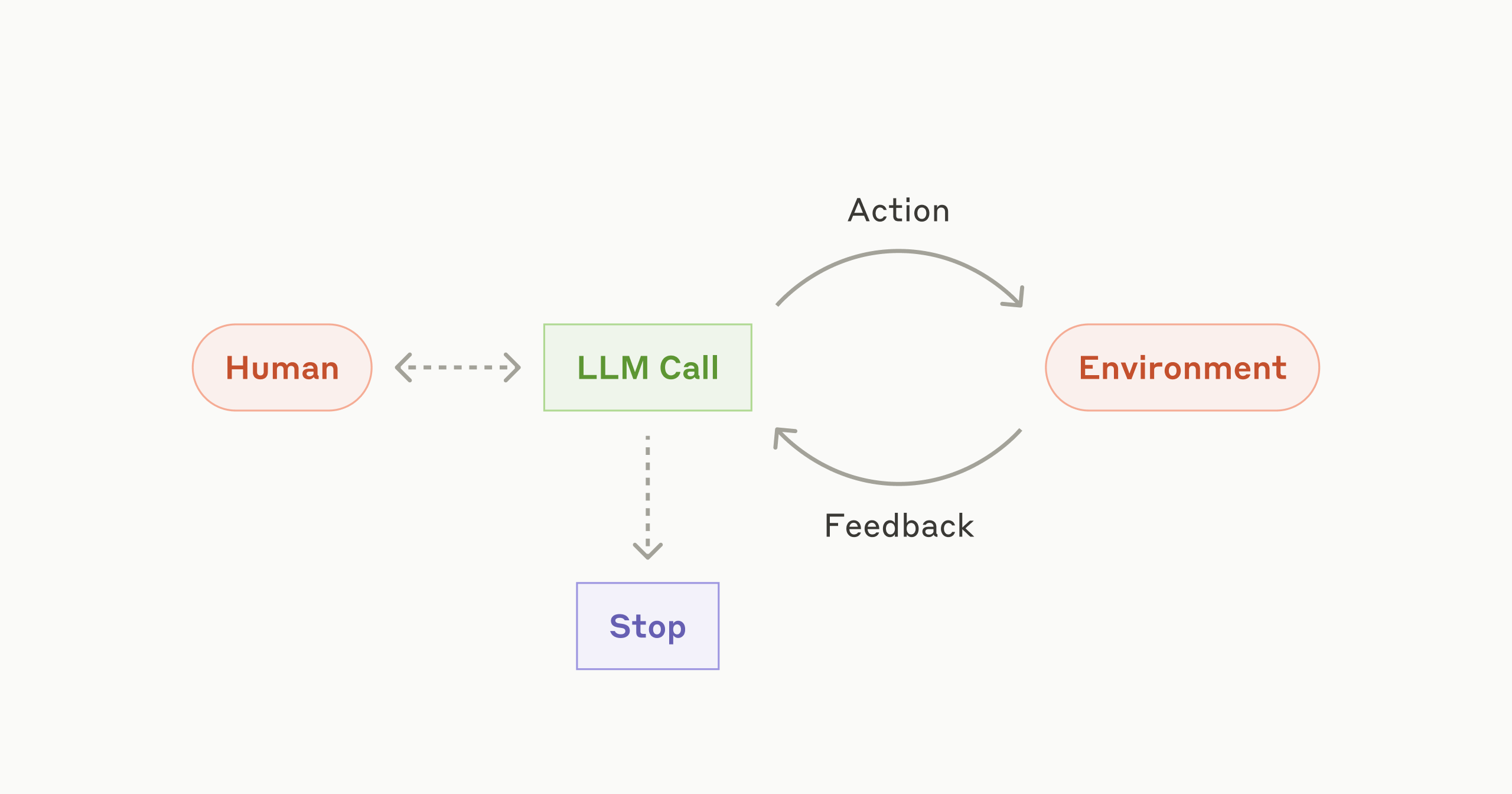
While workflows orchestrate LLMs and tools through predefined code paths, Agent LLMs determine tool usage and processes. In other words, Prompt Chaining and Parallelization are workflows, while agents do task planning and execution for unpredictable task paths. Workflows are used when predictability and consistency are needed, while agents are suitable for large-scale tasks that require flexibility and model-driven decision making.
Building effective agents
A post for developers with advice and workflows for building effective AI agents

https://www.anthropic.com/research/building-effective-agents
Examples
Building god
Or at least Talos

https://www.strangeloopcanon.com/p/building-god
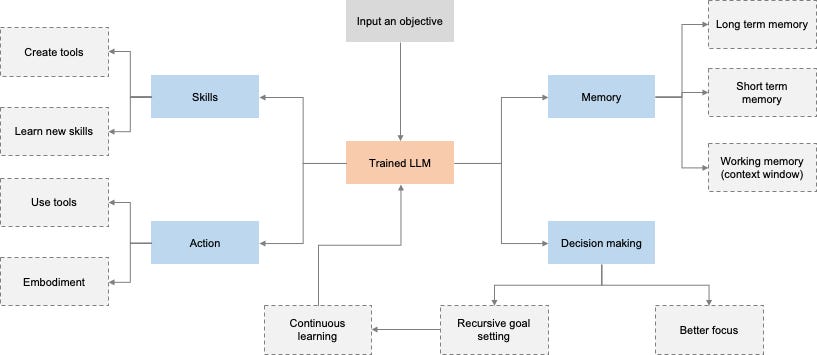
LLM Powered Autonomous Agents
Building agents with LLM (large language model) as its core controller is a cool concept. Several proof-of-concepts demos, such as AutoGPT, GPT-Engineer and BabyAGI, serve as inspiring examples. The potentiality of LLM extends beyond generating well-written copies, stories, essays and programs; it can be framed as a powerful general problem solver. Agent System Overview In a LLM-powered autonomous agent system, LLM functions as the agent’s brain, complemented by several key components:
https://lilianweng.github.io/posts/2023-06-23-agent/
Cognitive architecture
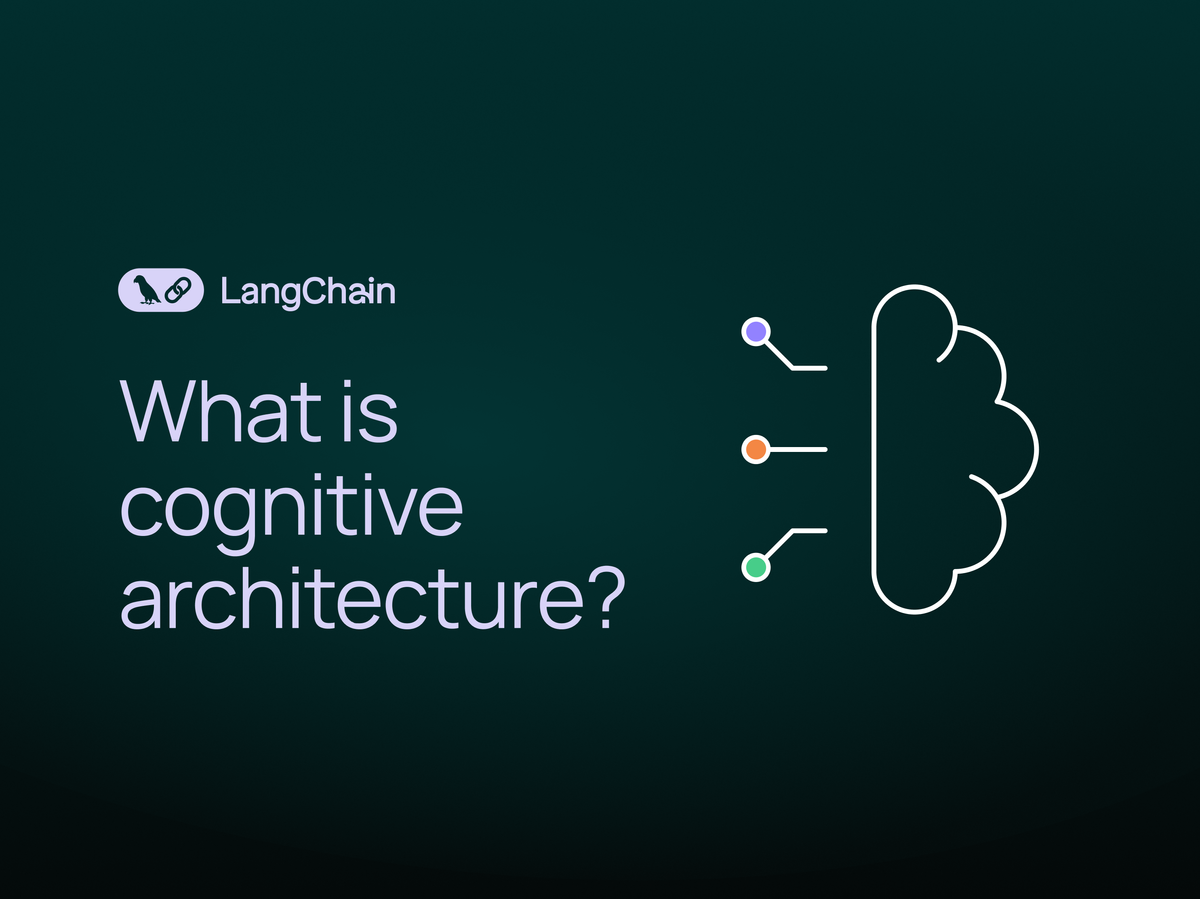
What is a "cognitive architecture"?
The second installment in our "In the Loop" series, focusing on cognitive architecture

https://blog.langchain.dev/what-is-a-cognitive-architecture
arxiv.org
https://arxiv.org/pdf/2304.03442.pdf
[오픈 소스 공부] babyagi 에 대해 알아보자
"Generative Agents: Interactive Simulacra of Human Behavior" 이라는 논문을 너무 재밌게 읽었고, (곧 리뷰하겠다) 구현해보고 싶다는 생각에 구글링을 하다가 langchain 이라는 오픈 소스를 찾았다. (곧 리뷰하겠다) langchain의 use cases 를 훑어보던 중 babyagi와 autogpt (너무 유명한) 프로젝트를 알게 되었는데, 두 프로젝트는 "autonomous agent" 라는 공통적인 목적을 갖고 있다. autonomous agent에 대한 개념은 langchain 문서에 정리되어 있는 것을 빌려 말해보면, chatgpt와 같이 우리의 요구 사항에 대한 solution을 반환하는 어떤 주체를 agent 라고 하자. autonomous ..
![[오픈 소스 공부] babyagi 에 대해 알아보자](https://t1.daumcdn.net/tistory_admin/favicon/tistory_favicon_32x32.ico)
https://techy8855.tistory.com/33
![[오픈 소스 공부] babyagi 에 대해 알아보자](https://img1.daumcdn.net/thumb/R800x0/?scode=mtistory2&fname=https%3A%2F%2Fblog.kakaocdn.net%2Fdn%2FbXwPKo%2FbtsepI0ysdG%2Fwuk6HdRARPohJqWgefhTIK%2Fimg.png)