

 Seonglae Cho
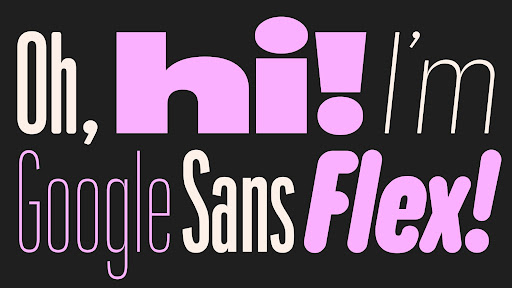
After the 2015 logo redesign, Product Sans was suitable for product names (lockups) but inadequate for UI, marketing, and lowercase text, leading to the development of Google Sans. Readability issues spawned variants like Google Sans Text (for small text), Google Sans Code (for coding), and Google Sans Mono. Due to Latin script limitations, it was massively expanded to 20+ writing systems including Arabic, Chinese, and Korean, growing into one of the world's largest typeface families. To address limited expressiveness, Google Sans Flex emerged as a variable font, enabling real-time adjustment of multiple axes including weight, width, and rounding. In 2025, Google Sans / Google Sans Flex became open source, aiming to provide a unified typographic experience across apps beyond Google.
Google Sans: Evolving Google’s Typeface - Google Design
Discover the inside story of Google Sans, Google’s iconic brand typeface. From product lockups to code, learn how the Google Sans font family has evolved to solve specific UX design problems.

https://design.google/library/google-sans-flex-font

Google Sans Flex - Google Fonts

https://fonts.google.com/specimen/Google+Sans+Flex
Google Fonts
Fonts source files and font utilities. Google Fonts has 421 repositories available. Follow their code on GitHub.

https://github.com/googlefonts
