

 Seonglae Cho
Majorana fermion
A Majorana fermion is a unique type of fermion that acts as its own antiparticle. This concept was first described by Ettore Majorana in 1937 through his introduction of the Majorana spinor.
Key aspects of Majorana fermions:
- Current status: It remains unconfirmed whether neutrinos are Majorana fermions
- Quantum computing potential: They show promise in implementing more stable qubits through:
- Topological protection
- Inherent error resistance in quantum bits
Majorana fermion
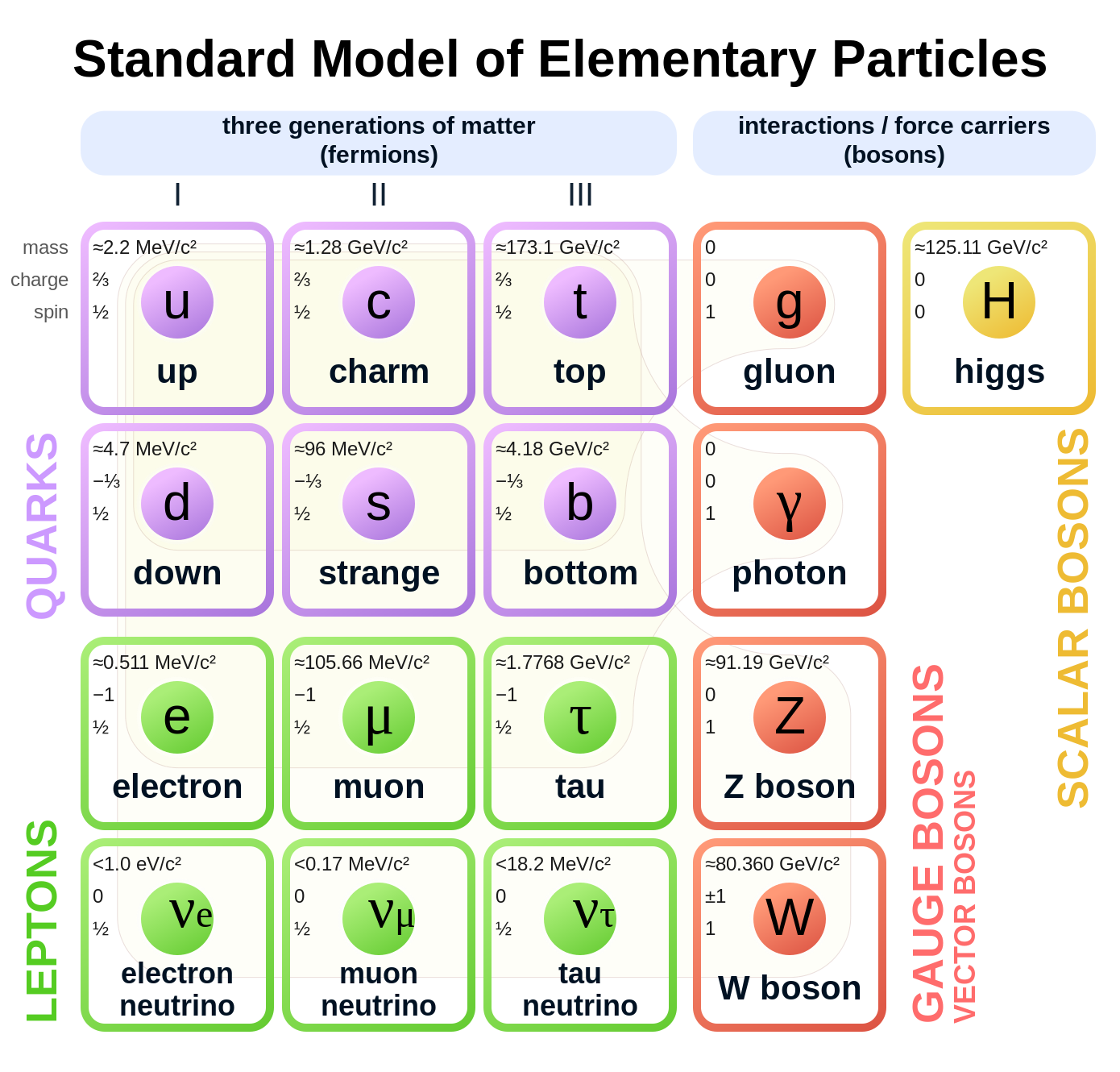
A Majorana fermion, also referred to as a Majorana particle, is a fermion that is its own antiparticle. They were hypothesised by Ettore Majorana in 1937. The term is sometimes used in opposition to a Dirac fermion, which describes fermions that are not their own antiparticles.

https://en.wikipedia.org/wiki/Majorana_fermion
InAs-Al hybrid devices passing the topological gap protocol
Topological phases of matter can enable highly stable qubits with small footprints, fast gate times, and digital control. These hardware-protected qubits must be fabricated with a material combination in which a topological phase can reliably be induced. The challenge: disorder can destroy the topological phase and obscure its detection. This paper reports on devices with low enough disorder to pass the topological gap protocol, thereby demonstrating gapped topological superconductivity and paving the way for a new stable qubit.

https://journals.aps.org/prb/abstract/10.1103/PhysRevB.107.245423

Microsoft milestone brings it a bit closer to quantum supercomputer
Long under the radar of Microsoft scientists, the Majorana particle is a crucial step in the software giant’s quantum computing dreams.

https://www.siliconrepublic.com/machines/microsoft-quantum-supercomputer-majorana-particle-breakthrough
