 Seonglae Cho
A paradigm shift is a concept in the philosophy of science, introduced into the common lexicon by American physicist and philosopher Thomas Kuhn in his influential book “The Structure of Scientific Revolutions” (1962).
Paradigm Shifts
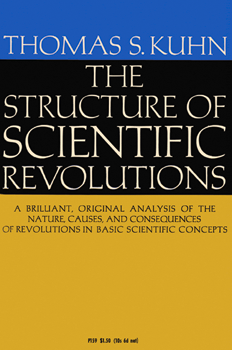
The Structure of Scientific Revolutions
The Structure of Scientific Revolutions is a 1962 book about the history of science by the philosopher Thomas S. Kuhn. Its publication was a landmark event in the history, philosophy, and sociology of science. Kuhn challenged the then prevailing view of progress in science in which scientific progress was viewed as "development-by-accumulation" of accepted facts and theories. Kuhn argued for an episodic model in which periods of conceptual continuity and cumulative progress, referred to as periods of "normal science", were interrupted by periods of revolutionary science. The discovery of "anomalies" accumulating and precipitating revolutions in science leads to new paradigms. New paradigms then ask new questions of old data, move beyond the mere "puzzle-solving" of the previous paradigm, alter the rules of the game and change the "map" directing new research.

https://en.wikipedia.org/wiki/The_Structure_of_Scientific_Revolutions