

 Seonglae Cho

AI for Science
Ability to make a Question
They are strong at implementation, experiment management, and inferring results. However, the ideas can be somewhat naive or less refined. The ideas may need to come from a human, but much of the rest can be automated to some extent. The ability to derive insights from results is not fully sufficient yet, and the diversity of connections is somewhat limited.
Research and development is generally not as economically valuable as people assume and it's significantly harder to automate R&D jobs than it might naively seem. Most AI value will come from broad automation.
Research Agents frequently utilize Evolutionary algorithm likely because this field has relatively fewer cost constraints and requires maximizing diverse approaches in method exploration.
AI Research Agents
OpenAI Deep Research
Gemini Deep Research
Open Deep Research
Google Co-Scientist
Elicit AI
Open Operator
Liner AI
Research Rabbit
OpenScholar
Agent Laboratory
RD Agent
Local Deep Researcher
Paper Finder
CodeScientist
Claude Research
Deep Flow
AlphaEvolve
Darwin Gödel Machine
Real Deep Research
Theorizer Agent
Perplexity Deep Research
AI Scientist
AI Research Agent Benchmarks
AI Research Tools
Software Security


Google AI co-scientist multi agent system with Elo Score with self-improvement



Automating Scientific research experiments (future house)


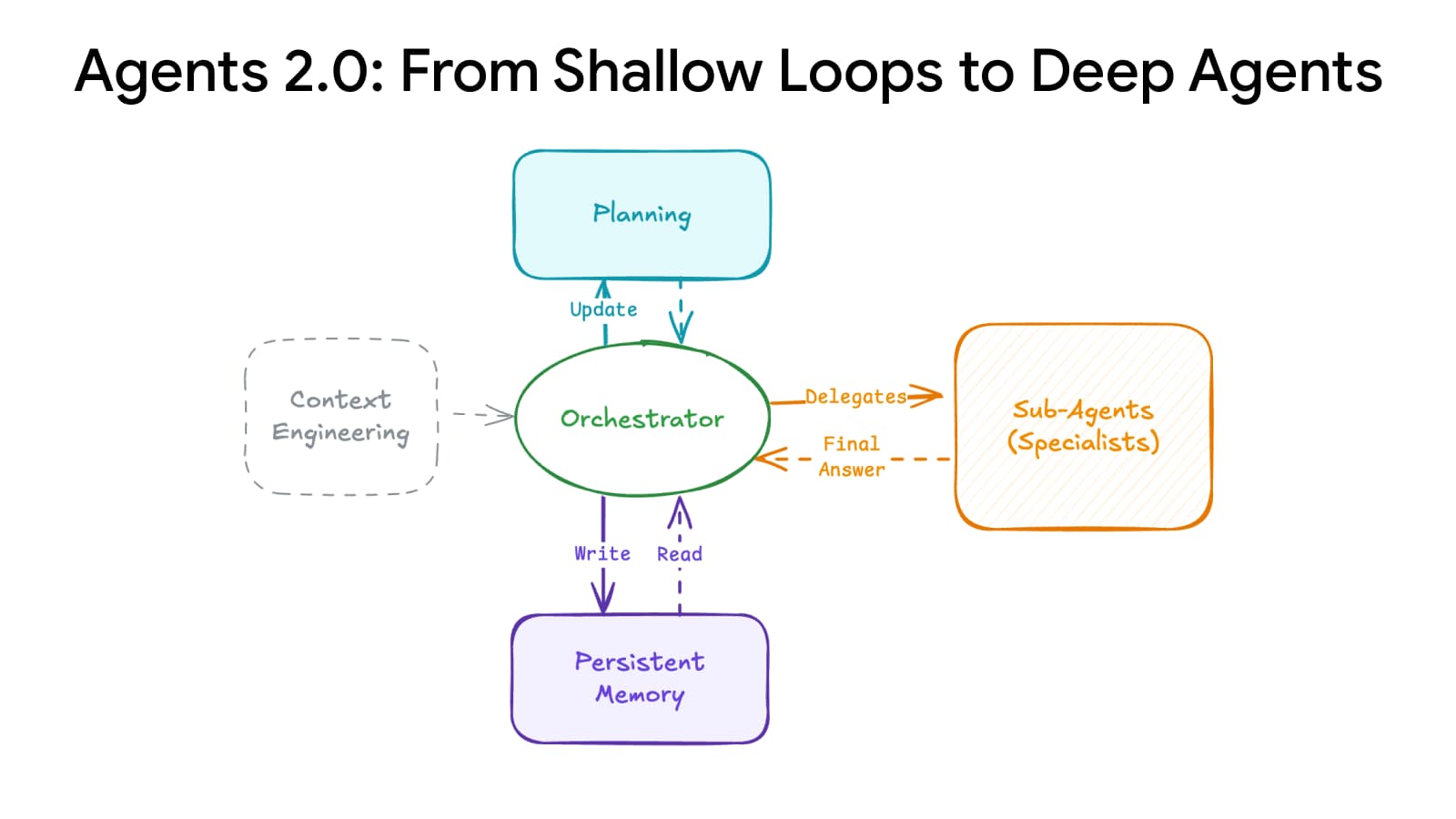
Context engineering (not diffusion)
Research contexts are complex and non-linear, making Context Engineering difficult
- Developer agent
- Experimenter agent - Jupyter notebook access (Juupyter MCP)


Shallow loop limitation
In AI for scientific research, there are two approaches: Scientist (LLM-based reasoning) and Simulator (a domain-specific ML model).

