 Seonglae Cho
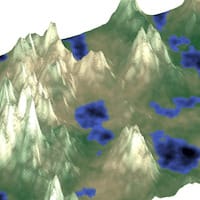
If you sample height values as pure random noise, you get a bumpy, unusable result. But if you place a random-direction gradient vector at each grid intersection and, at each point, take the dot products with the vectors pointing toward the surrounding intersections and combine them, you get smooth, natural-looking terrain.
Perlin noise doesn’t simply “sum” the corner dot-product values; it uses a fade function to perform smoothstep interpolation.
게임에서 지형을 만들 때 쓰는 특수한 수학 기법 #프로그래밍 #펄린노이즈 #수학 #절차적생성

https://www.youtube.com/shorts/kY9TYQYxCZM

Perlin noise
Perlin noise is a type of gradient noise developed by Ken Perlin in 1982. It has many uses, including but not limited to: procedurally generating terrain, applying pseudo-random changes to a variable, and assisting in the creation of image textures. It is most commonly implemented in two, three, or four dimensions, but can be defined for any number of dimensions.

https://en.wikipedia.org/wiki/Perlin_noise
Red Blob Games: Making maps with noise functions
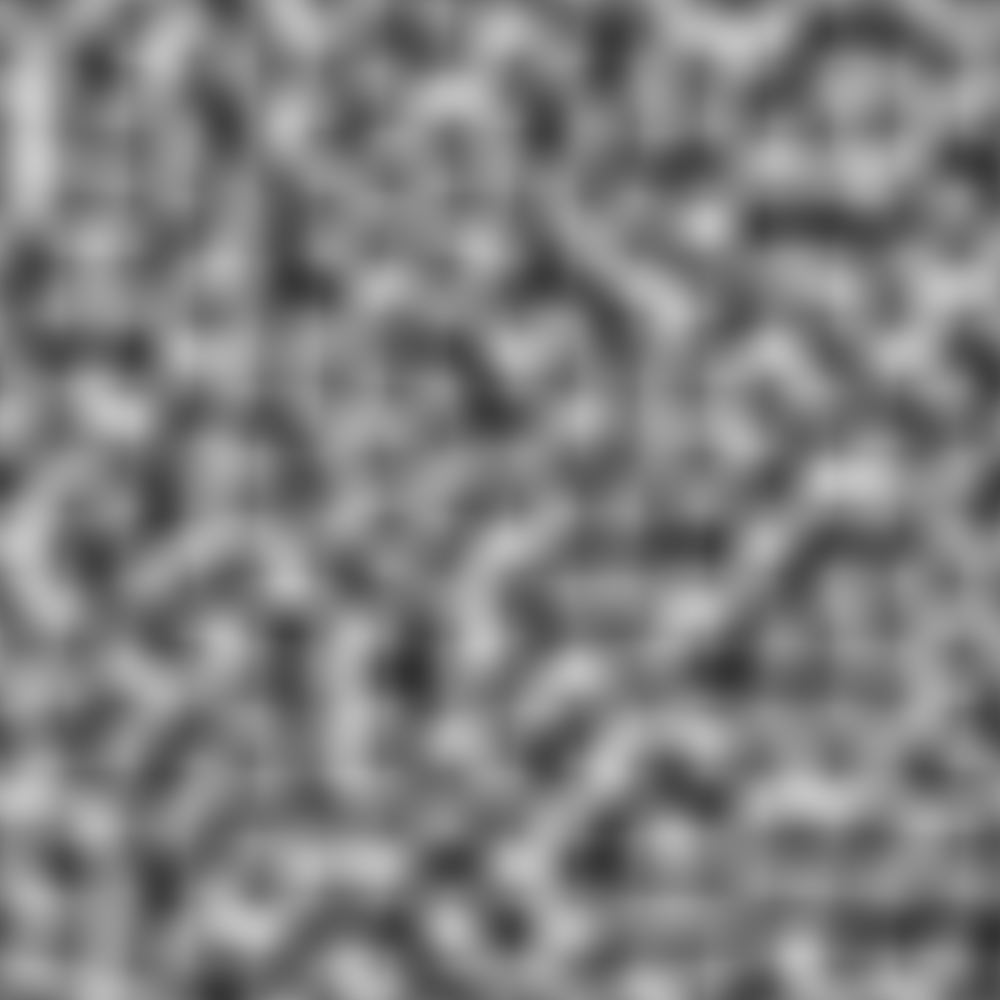
Interactive tutorial for using Simplex/Perlin noise to make terrain and biomes for a wilderness map
https://www.redblobgames.com/maps/terrain-from-noise/