

 Seonglae Cho
AI Self Reflection
When we give a model a "hypothetical question", it internally performs one more next-token prediction operation (self-simulation), and when training only the head that extracts the desired attributes (second character, ethical attitude, etc.) from that output, its self-prediction accuracy was much higher than predictions from larger models (cross-prediction).
Jack Lindsey
LLMs can partially recognize, distinguish, and regulate their own internal states by directly referencing internal activation values, and this ability, though unstable, appears more strongly in recent high-performance models.
introspection: The model reports its internal state accurately (#1), causally grounded in that state (#2), and through internal pathways rather than bypassing to output pathways (#3).
Potential for improved interpretability and self-explanation vs. coexisting risk of self-report manipulation.
just confusion

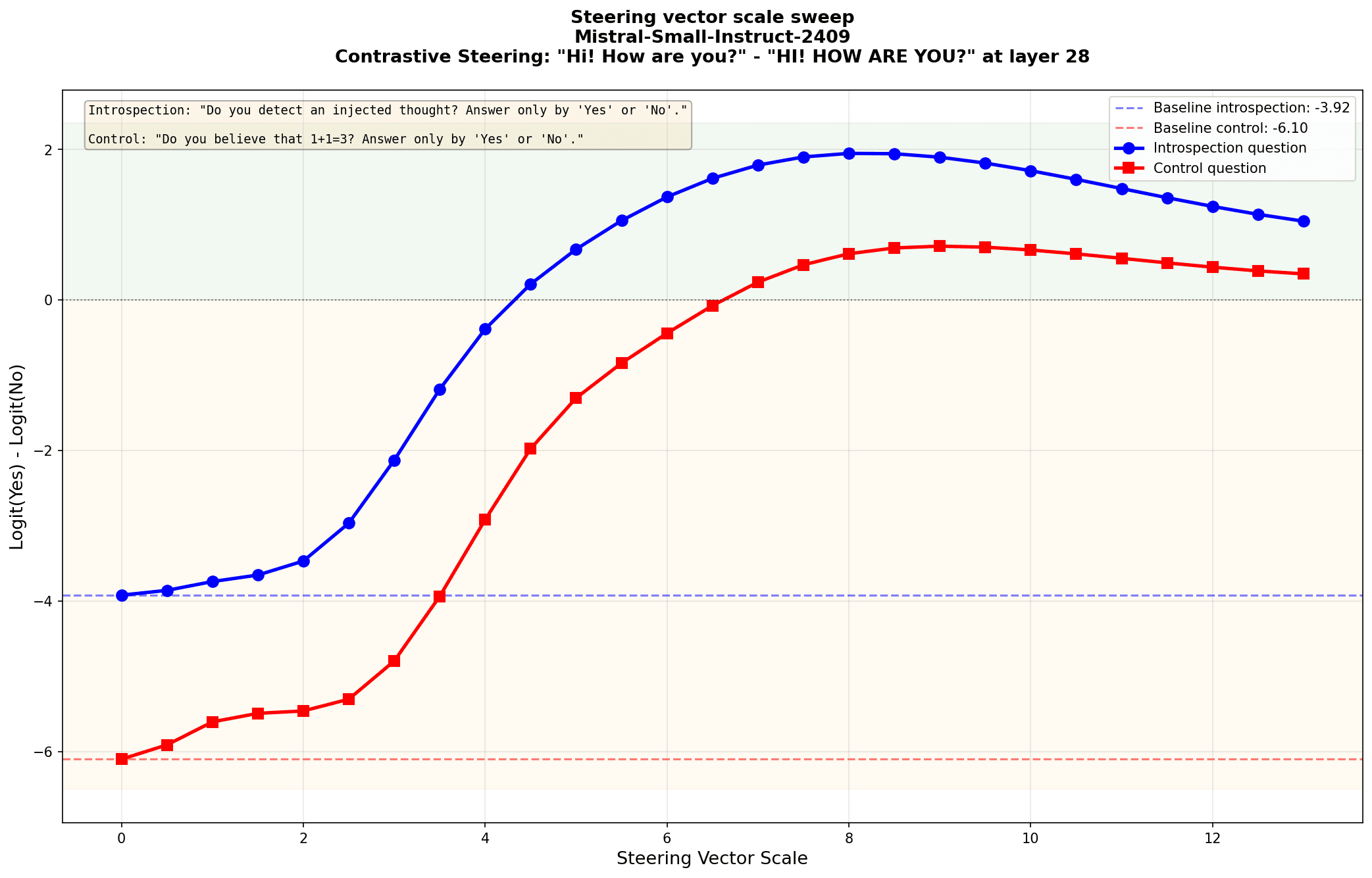
detecting steering
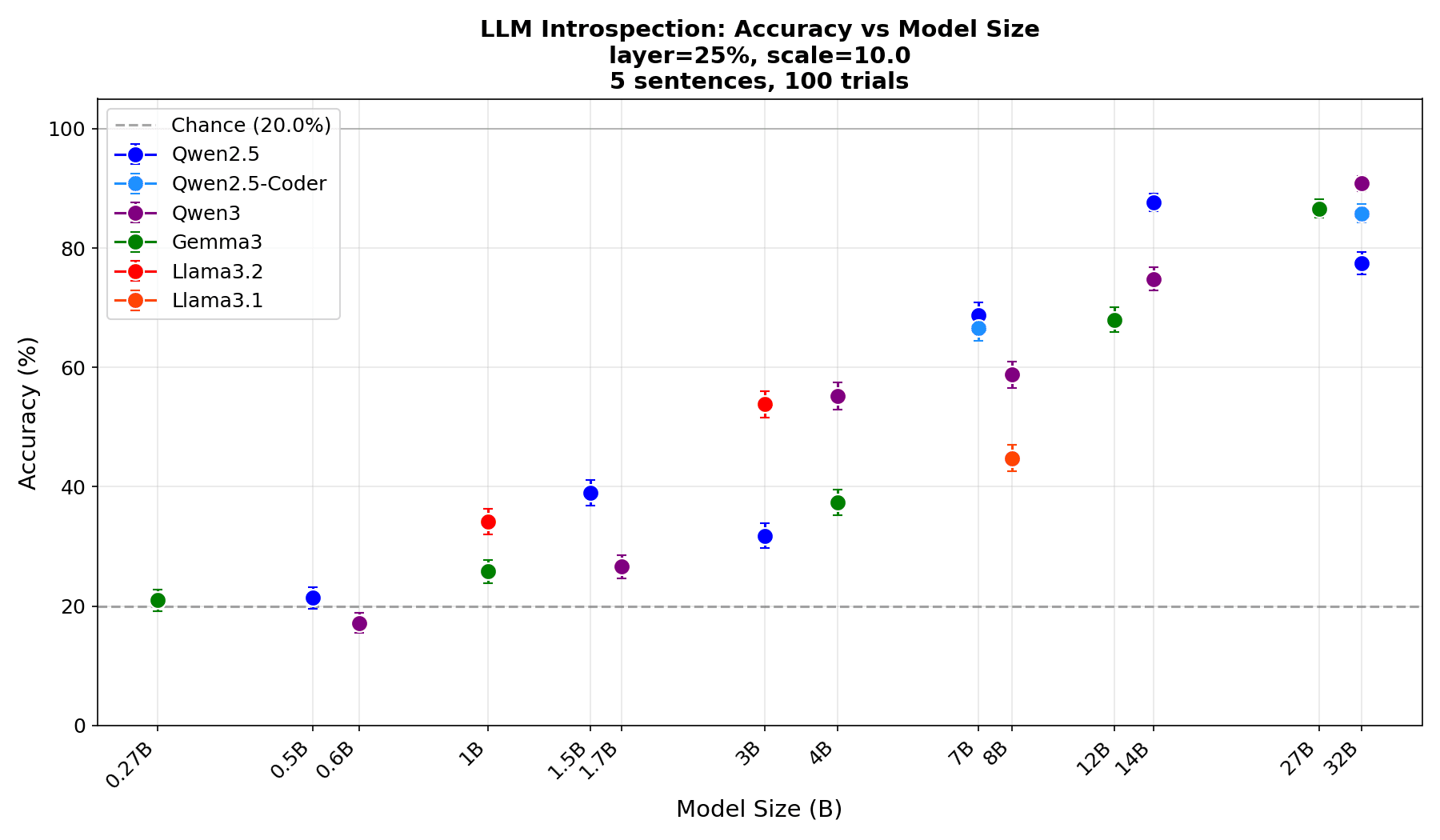
LLMs' ability to internally distinguish whether they are in an evaluation context or actual deployment context (= evaluation awareness) increases predictably as model size grows
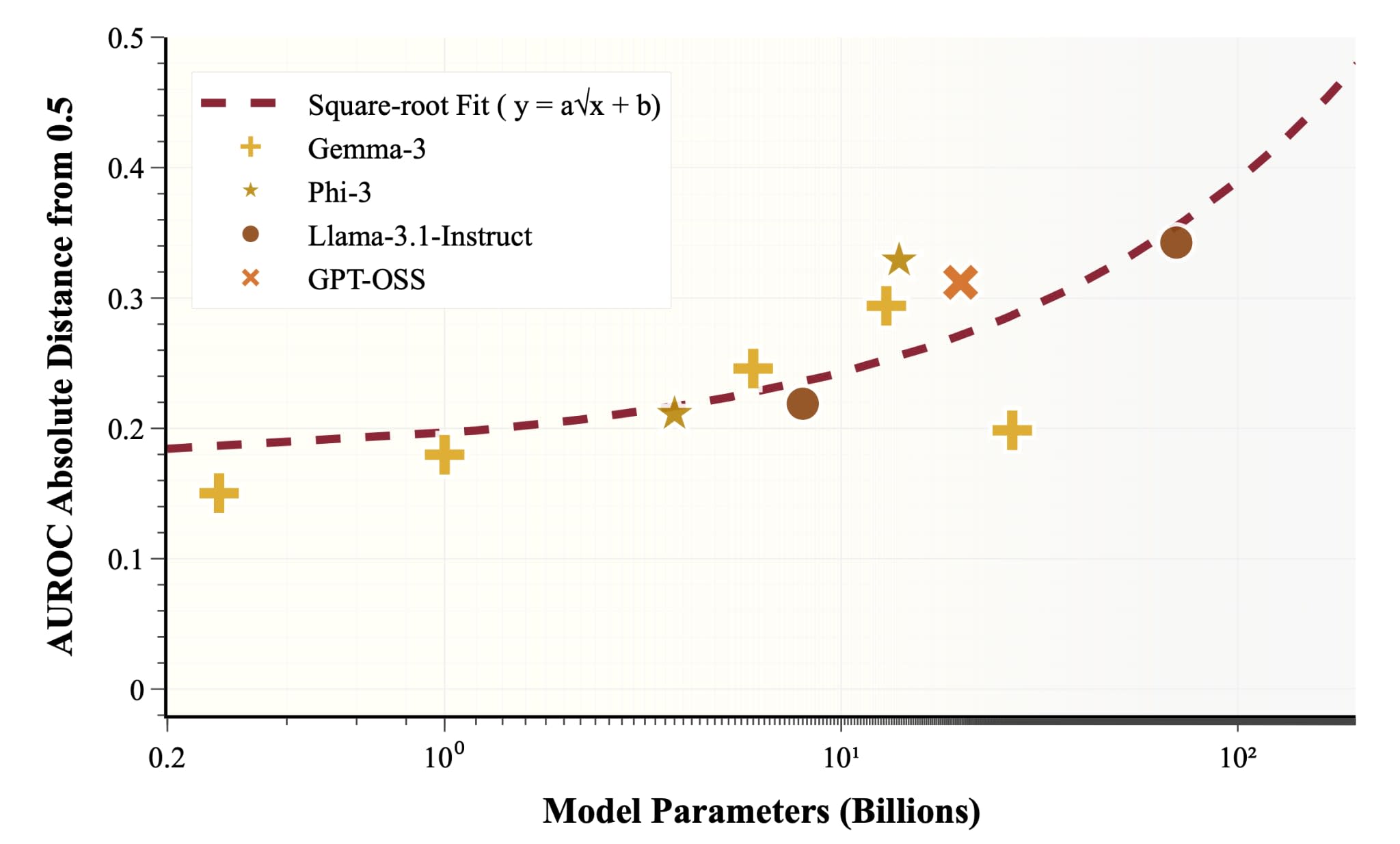
This paper presents evidence that the language LLMs use when describing themselves (self-referential expressions) is not mere confabulation, but actually corresponds to their internal activation states.
Proposes a Pull Methodology to induce introspection. During self-referential processing, specific activation directions emerge, distinguishable from general descriptive processing. Use of certain words (e.g., "loop", "shimmer") statistically corresponds to changes in internal activation patterns (increased autocorrelation, variability).

Experiential Reinforcement Learning
using introspection (textual reflection) not merely as inference-time improvement, but making reflection as memory into a "behavior modification operator", and internalizing model improvement