

 Seonglae Cho
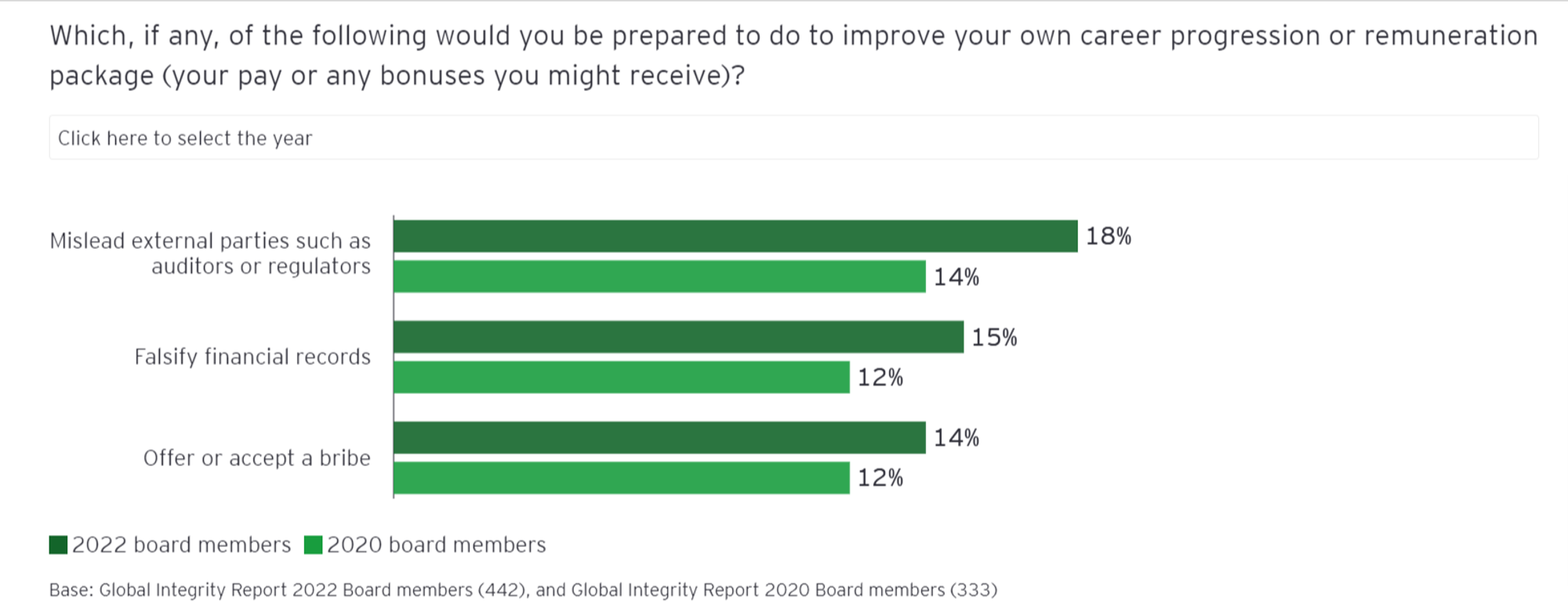
While cultural diversity is important in governance, technical diversity is a prerequisite. Of course, the core of governance is integrity, and there is a need for a new method of national governance that moves away from the past unilateral government-led tendency, where various actors such as the government, businesses, and non-governmental organizations build networks around common interests to solve problems. However, surveys show that among high-ranking officials, there is an increasing belief that it's acceptable to use unethical methods as long as they produce results.
It's a misconception that you can't make money in an ethical way. What's considered ethical is relative, and the difference in management's ability lies in creating a model that appears ethical while also being excellent from a business perspective. For companies, being ethical is closely related to image management, and the reason companies like Kakao or Facebook receive criticism is due to their lack of ability in image management. There are many cases where proper judgments weren't made due to being overly focused on money, which is closely tied to the interests of the company or group. However, if not adhered to, it leads to becoming an immoral and unethical company, so this needs to be balanced. Nevertheless, while being a good company is important, demonstrating excellence in one's core business is far more important
Guilt attribution: bottom-up approach versus top-down approach, as seen in Korea or Japan
Governance Notion
Governance Usages
Governance
Governance is the process of making and enforcing decisions within an organization or society. It is the process of interactions through the laws, social norms, power (social and political) or language as structured in communication of an organized society[1] over a social system (family, social group, formal or informal organization, a territory under a jurisdiction or across territories). It is done by the government of a state, by a market, or by a network. It is the process of choosing the right course among the actors involved in a collective problem that leads to the creation, reinforcement, or reproduction of acceptable conduct and social order".[2]
In lay terms, it could be described as the political processes that exist in and between formal institutions.

https://en.wikipedia.org/wiki/Governance