Dialogue System
Human should focus on composing and organizing information not providing answer
Because AI is much better at providing information and give answers
Anyway, the final form of AI product would be Communication form
Helpfulness, Expertise, Transparency, Clarity, Thoroughness
Think LLMs as simulators but as entities. "What do you think about xyz"? There is no "you". Next time try: "What would be a good group of people to explore xyz? What would they say?"‣.
Current transformer-based LLMs clearly possess a usable level of intelligence, but they don't have identity like humans do. Due to the vast amount of training data, numerous intelligences or identities are overlapped, which is why inconsistent results occur. This is actually an advantage from a simulation perspective - when conversing with an LLM, if you think of it as an entity, you might get angry or emotional, but if you view it as prompt simulation, you won't.
Chat Group Services
Dialogue System Notion
Model autoselection
The Great AI UI Unification
ChatGPT starts cleaning up the cruft...

https://spyglass.org/chatgpt-ai-ui/

Performance
Chat with Open Large Language Models
https://chat.lmsys.org/
Chatbot Arena Leaderboard - a Hugging Face Space by lmsys
Discover amazing ML apps made by the community
https://huggingface.co/spaces/lmsys/chatbot-arena-leaderboard
Stats
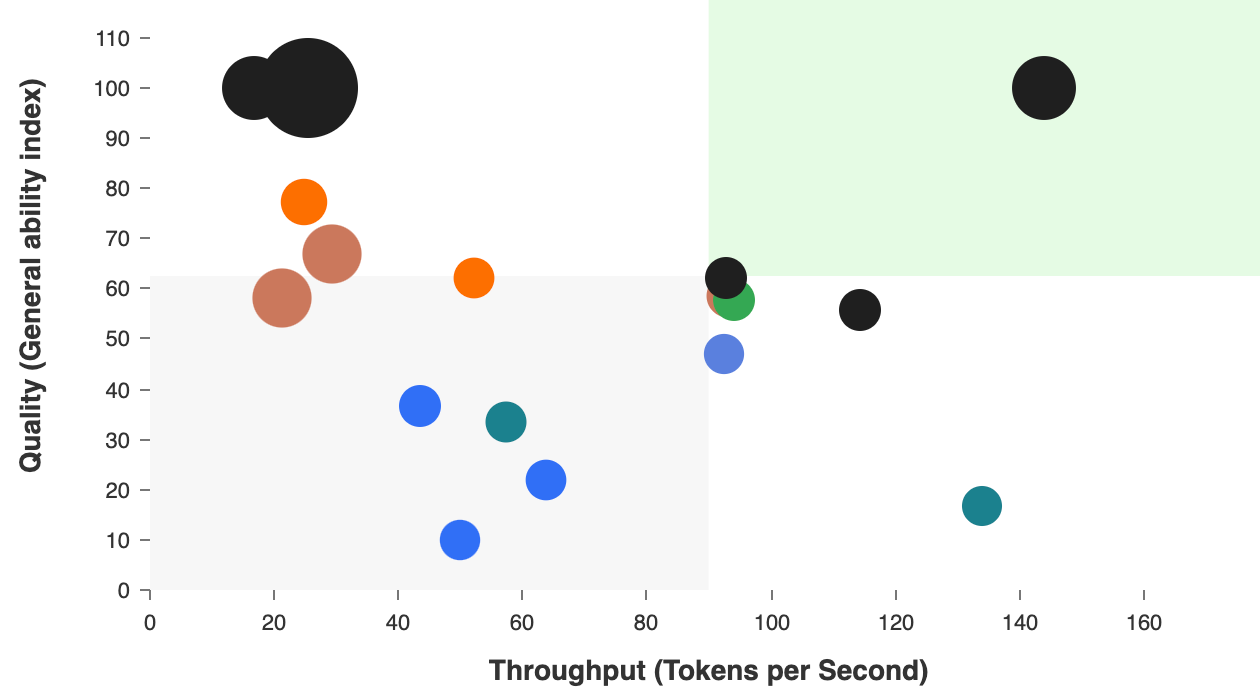
Model & API Hosts Analysis | Artificial Analysis
Comparison and analysis of AI models and API hosting providers. Independent benchmarks across key metrics including quality, price, performance and speed (throughput & latency).
https://artificialanalysis.ai/
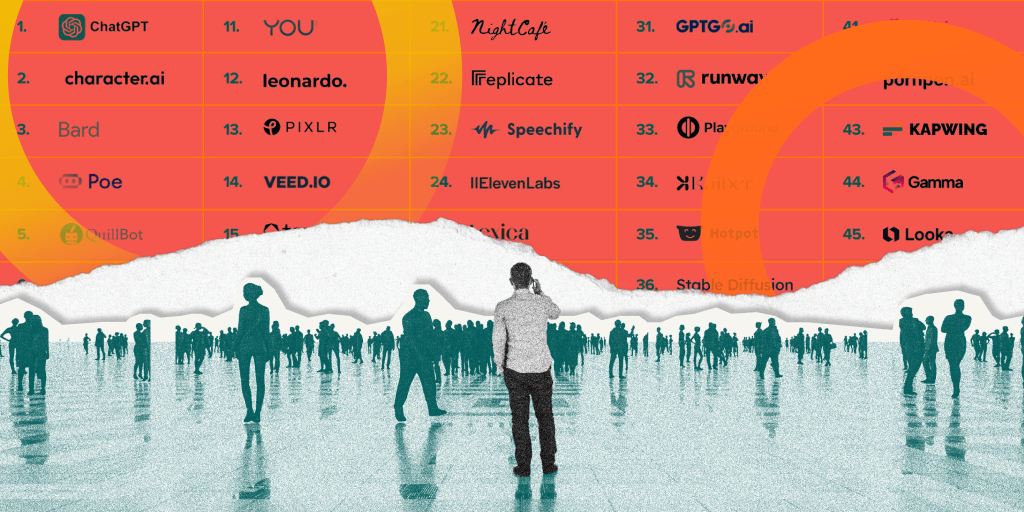
How Are Consumers Using Generative AI? | Andreessen Horowitz
To see how people are interacting with generative AI, we used data to rank the top 50 GenAI web products by monthly visits.

https://a16z.com/how-are-consumers-using-generative-ai
AI Personality
Claude’s Character \ Anthropic
Anthropic is an AI safety and research company that's working to build reliable, interpretable, and steerable AI systems.

https://www.anthropic.com/research/claude-character
Using Crosscoder for chat Model Diffing reveals issues with traditional L1 sparsity approaches: many "chat-specific features" are falsely identified because they are actually existing concepts that shrink to zero in one model during training. Most chat-exclusive latents are training artifacts rather than genuine new capabilities.
Complete Shrinkage → A shared concept where one model's decoder shrinks to zero. Latent Decoupling → The same concept is represented by different latent combinations in two models.
Using Top-K (L0-style) sparsity instead of L1 reduces false positives and retains only alignment-related features. Chat tuning effects are primarily not about capabilities themselves, but rather: safety/refusal mechanisms, dialogue format processing, response length and summarization controls, and template token-based control. In other words, it acts more like a shallow layer that steers existing capabilities.
arxiv.org
https://arxiv.org/pdf/2504.02922

Seonglae Cho
